

Infrared is a type of invisible electromagnetic radiation. It lies just beyond the red end of what we can see. We feel it as heat from different sources.
This amazing radiation is key to many modern technologies. It’s used in TV remotes and advanced scientific tools. It has changed how we use devices and understand our surroundings.
Infrared does two main things: it sends signals and it senses changes. Wireless signals send commands through the air. Special sensors pick up on heat and environmental shifts.
It’s used in many areas, like gadgets, medical tools, and industrial systems. Infrared’s wide range of uses keeps driving new ideas. It’s a vital part of today’s technology.
Understanding Infrared Radiation Fundamentals
Infrared technology is a part of the electromagnetic spectrum that we can’t see. Yet, it plays a big role in our daily lives. This section looks into the science behind infrared radiation and its many uses.
The Electromagnetic Spectrum and IR Positioning
Infrared radiation is between visible light and microwave radiation in the electromagnetic spectrum. This spot gives infrared its special traits that set it apart from other electromagnetic energies.
William Herschel discovered infrared radiation in 1800. He used coloured filters to measure light colours’ temperatures. He found that beyond red light, temperatures rose, showing the existence of invisible thermal radiation, now known as infrared.
Infrared waves have longer wavelengths than visible light but shorter than microwaves. This makes infrared perfect for communication and sensing.
Related Posts:
- The Top Technology Trends to Watch in 2024

- What Is Clicker Technology Classroom Response Systems

- What Is Moen Reflex Technology Smooth Water Flow Control

- What Is the National Institute of Standards and…

- How Technology Is Good for Students Enhancing Learning

- What Is Esthetics Technology? Exploring Modern Tools…

Properties and Characteristics of Infrared Waves
Infrared radiation has unique physical properties. It’s mostly felt as heat, not light, but shares some traits with visible light.
All objects warmer than absolute zero (-273°C) give off infrared radiation. The type and intensity depend on the object’s temperature. Hotter objects emit more intense infrared with shorter wavelengths.
Wavelength Ranges and Their Significance
The infrared spectrum is split into five main areas based on wavelength. Each area has its own uses:
- Near-Infrared (NIR): 700-1400 nm – used in fibre optics and remote controls
- Short-Wavelength Infrared (SWIR): 1400-3000 nm – used in agricultural monitoring and material analysis
- Mid-Infrared (MIR): 3000-8000 nm – used in chemical sensing and gas detection
- Long-Wavelength Infrared (LWIR): 8000-15000 nm – used in thermal imaging
- Far-Infrared (FIR): 15000 nm-1 mm – used in astronomy and some medical therapies
Understanding these infrared ranges is key for using infrared technology in various fields. It helps in implementing infrared technology effectively.
Thermal Properties and Energy Transmission
Infrared waves’ thermal properties make them useful for temperature measurement and heat transfer. The intensity and spectral distribution of emitted radiation depend on the object’s temperature.
Infrared energy transmission happens through three main ways:
- Absorption: Infrared energy is absorbed by materials, causing molecular vibration and temperature increase
- Reflection: Infrared waves bounce off surfaces, enabling detection without direct contact
- Transmission: Certain materials allow infrared waves to pass through with minimal absorption
This explains why some materials appear transparent to infrared cameras but block visible light. The selective absorption of specific infrared wavelengths by different gases is crucial for environmental monitoring and industrial process control.
Infrared’s unique thermal properties make it essential for non-contact temperature measurement, night vision, and scientific instruments that detect heat signatures.
What Is IR Technology: Core Concepts and Principles
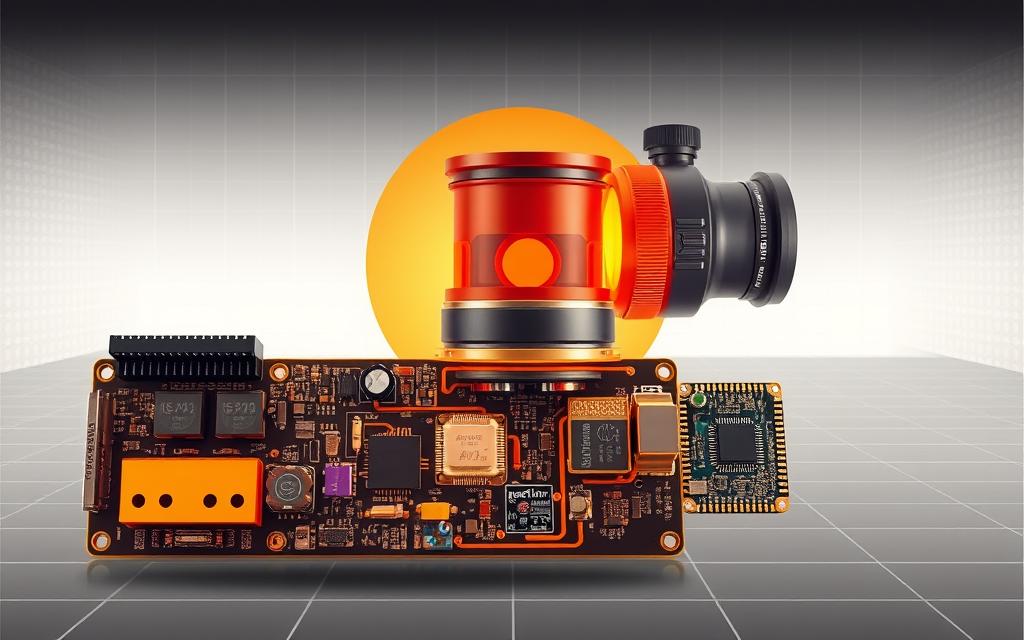
Infrared technology uses special parts to send and catch invisible light. These parts are key to all IR systems. They help with communication and sensing in many fields.
Basic Components of IR Systems
IR systems have two main parts: senders and detectors. Together, they make IR systems work for different tech uses.
Infrared Transmitters and LEDs
Infrared transmitters send out invisible light. The most common is the IR LED. It sends light from 700 nm to 1 mm.
IR LEDs are made from gallium arsenide or aluminium gallium arsenide. When current flows, they send out infrared light. This light is not seen by the human eye.
These LEDs are made to block visible light but let infrared through. This helps them send infrared light better.
IR Receivers and Sensors
IR receivers catch infrared light and turn it into electrical signals. They use photodiodes or phototransistors to sense infrared light.
Today’s IR sensors can measure many things like temperature and motion. They are good for both detailed measurements and general detection.
Fundamental Operating Mechanisms
IR systems work on complex principles for good performance. Modulation is key, especially in communication.
Modulation stops unwanted signals by coding signals in patterns. Methods like pulse width modulation help. They make sure signals are clear and not mixed up with background noise.
How sensors catch infrared light affects their accuracy. Direct and indirect methods are used. Direct is straight, while indirect uses reflected light.
| Component Type | Primary Function | Common Materials | Typical Applications |
|---|---|---|---|
| IR Transmitters | Generate infrared radiation | Gallium arsenide | Remote controls, data transmission |
| IR Receivers | Detect infrared signals | Silicon, germanium | Motion sensors, temperature measurement |
| Photodiodes | Convert light to current | Semiconductor compounds | Optical communications, light sensing |
| Phototransistors | Amplify detected signals | Semiconductor materials | Proximity sensors, object detection |
The IR receivers working principle turns photon energy into electrical signals. This lets them measure and detect things accurately in many fields.
Knowing these basics helps us understand infrared technology’s wide uses. The mix of senders and detectors makes systems very precise and reliable.
Infrared Communication Systems
Infrared technology makes communication possible through special protocols and wireless systems. It turns invisible light into useful ways to share data.
IR Data Transmission Protocols
Standardised protocols ensure reliable infrared communication between devices. They guide how information is encoded, sent, and decoded.
IrDA Standards and Specifications
The Infrared Data Association set up IrDA standards for devices to talk to each other. These rules cover physical needs and data link protocols.
Key IrDA features include:
- Point-to-point communication only
- Directional requirements with 30-degree cone
- Data rates from 9.6 kbit/s to 16 Mbit/s
- Low power consumption design
Consumer Electronics Protocols
Manufacturers created special protocols for everyday devices. TV remotes, audio systems, and air conditioners use their own code sets.
These protocols use pulse-width modulation to send binary data. Different pulse patterns mean different commands and functions.
Wireless Communication Applications
Infrared allows devices to talk to each other without cables. It’s perfect for many uses.
Remote Control Systems
Remote controls are a common wireless IR communication use. They send signals to TVs, stereos, and more.
Modern universal remotes can learn and store many device codes. Infrared repeaters help signals reach every room.
Short-Range Data Transfer
Before Bluetooth, infrared was key for short-range data sharing. PDAs used IR data transmission for syncing contacts and calendars.
Some devices still use infrared for secure, short messages. Its need for a direct line of sight adds security.
Car systems use infrared sensors to spot nearby objects. They warn drivers of dangers through wireless signals.
Infrared Sensing Technologies
Infrared sensing is a key use of IR technology. It lets devices sense their surroundings without touching them. There are two main types: passive and active infrared sensing. Each works in a different way and has its own uses.
Passive Infrared (PIR) Sensors
PIR sensors spot motion by looking at changes in infrared radiation. They don’t send out any radiation themselves. This makes them energy-saving and quiet.
Motion Detection Principles
These sensors use special materials that create electrical charges when they see infrared radiation. When something warm moves into the area, it changes the IR pattern.
The sensor’s Fresnel lens focuses infrared radiation. This makes it more sensitive and defines the area it covers. This tech is key for motion detection in many places.
Security and Automation Applications
PIR sensors are vital in modern security systems. They set off alarms when they see movement they shouldn’t. They also turn on lights when someone enters a room.
They’re used in automatic doors, energy saving systems, and smart homes. Their passive nature means they work well without using a lot of power.
Active IR Sensing Systems
Active infrared systems send out and catch infrared radiation. They give more detailed info about the environment than passive ones. They’re better at measuring distance and figuring out what objects are.
Distance Measurement Techniques
Active IR sensing uses different ways to figure out distance. It can use time-of-flight or angles of return. The emitter sends out pulses, and the receiver measures how long it takes to come back or the angle it comes back at.
Proximity sensors use a reflective method. An IR LED sends out radiation that bounces off objects and comes back to a photodiode. This lets them measure distance without touching anything.
Object Detection Capabilities
Active IR systems can do more than just see if something is there. They can tell what something is by looking at how it reflects infrared radiation. Different things reflect radiation in different ways, so they can guess what something is.
This makes active IR sensing great for industrial automation, robotics, and checking the quality of things. It can tell if something is there, how close it is, and even what it’s made of by analyzing the signals.
Thermal Imaging and Temperature Measurement
Infrared technology changes how we see and measure heat. It turns invisible heat into clear pictures. This lets us check temperatures without touching anything.
Infrared Thermography Principles
Infrared thermography works because all objects give off heat. The hotter they are, the more heat they give off. This follows the laws of black body radiation.
Heat Signature Detection
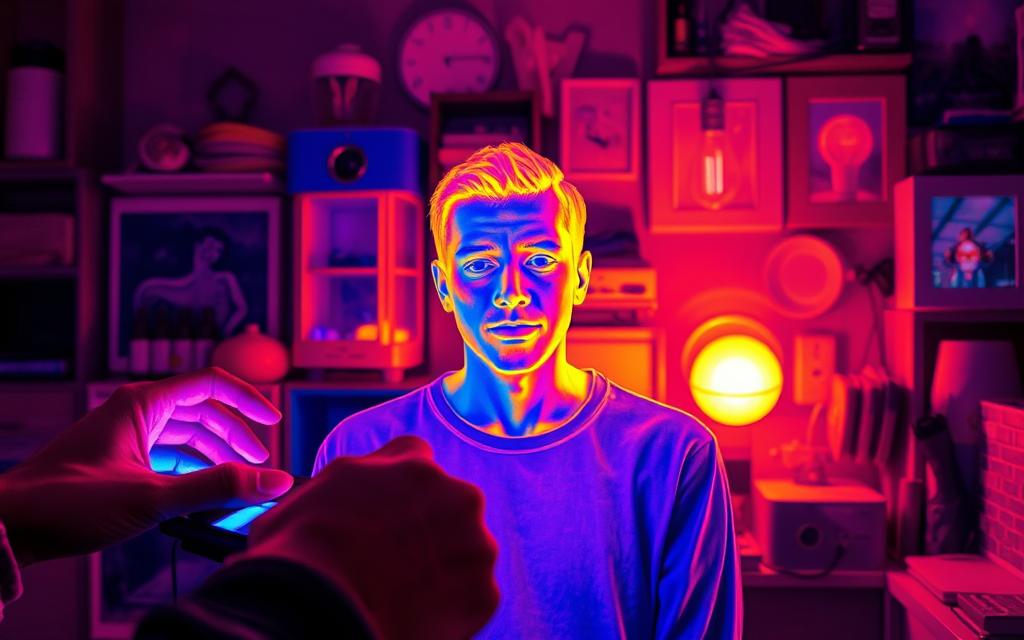
Thermal cameras spot tiny changes in temperature. They turn heat into electrical signals. Then, processors turn these signals into pictures.
These pictures show temperature differences in colour. This makes detailed heat maps. Modern systems can spot changes as small as 0.01°C. This makes thermal imaging great for finding hidden problems.
Non-Contact Temperature Sensing
Non-contact temperature sensing is safer than old methods. IR sensors measure temperature from a distance. This avoids damage and contamination risks.
This is especially useful in places where you can’t touch things. Like in hospitals, factories, and labs.
Industrial and Medical Applications
In factories, infrared thermography checks equipment and quality. It finds overheating parts and electrical issues. It also spots insulation problems before they fail.
In hospitals, thermal cameras find inflammation and fevers. They help with many medical tests. They can spot circulatory issues, track healing, and find cancers by their heat.
As one researcher said:
Thermal imaging gives us a peek into the body without touching it. Other tech can’t do that.
Non-contact temperature sensing is getting more important. It’s a key tool in many fields now.
IR Technology in Consumer Electronics
Infrared technology is now a key part of our daily lives, hidden in many household items. It makes our entertainment systems and smart homes work wirelessly. We often don’t even notice it’s there.
Television and Audio System Controls
Remote controls for TVs and audio systems use infrared technology. They send signals to devices, telling them what to do. Each button press sends a unique signal that devices understand.
Remotes have changed a lot since the 1980s. Now, they can control many devices from different brands. This is thanks to advanced technology and learning features. It’s reliable and affordable for us to use at home.
Smart Home Integration
Infrared technology is key in making smart homes work together. It connects different devices to a central control system. This way, everything in the home can work as one.
Home Automation Systems
IR-based home automation systems control lights, climate, security, and entertainment. They use infrared to make homes respond to our needs. This makes our lives easier and more energy-efficient.
These systems can even detect when we’re not home. They then adjust settings to save energy. This is all thanks to infrared technology’s ability to work wirelessly.
Infrared sensors help manage energy in smart homes. They adjust heating, cooling, and lighting based on who’s home and the weather. This saves energy and money.
Thermal imaging technology is now used in home security. It lets homeowners see unusual heat patterns. This could mean there’s a problem.
Universal remotes and IR learning systems show how far infrared technology has come. These advanced remotes can control many devices from different brands. They make our lives easier and are reliable.
Industrial and Commercial Applications
More and more, factories and big buildings use infrared tech for controlling processes and managing energy. These industrial IR applications offer non-touch solutions that boost efficiency in many areas. Anyone researching infrared communication sensing may also want to understand top trends watch 2024 before deciding on the best option. Even cars use IR sensors to spot objects and warn drivers of dangers.

Manufacturing Process Control
Infrared tech changes manufacturing process control by letting us watch processes in real-time without touching them. It keeps temperatures just right, making sure products are always the same. Readers exploring infrared communication sensing often end up considering nike lunarlon cushioning comfort as part of the same topic. IR doesn't touch things, so it's safe for making sensitive products.
Quality Assurance Systems
IR quality checks find problems by looking at heat patterns. They spot temperature changes that show up flaws or bad materials. Companies use infrared to check if parts and products are good.
These systems can spot tiny temperature changes that show hidden problems. This stops bad products from being sold and cuts down on waste.
Production Line Monitoring
Infrared sensors track objects and count them on production lines. They check if things are put together right by looking at heat signs at different stages. This makes sure parts are in the right place and finds any mistakes.
Watching production in real-time means problems can be fixed right away. This keeps production going smoothly and quality high.
Building Management Systems
Today’s building management systems use infrared to run buildings smartly. They use less energy while keeping people comfortable. The tech gives insights to make buildings work better.
HVAC Control and Optimisation
IR tech makes HVAC systems better by finding people and mapping temperatures. It spots where people are and adjusts heating or cooling. This saves energy and keeps places comfy.
It can see body heat to figure out who’s in a room and when. This lets it control the climate based on who’s there, not just a schedule.
Energy Efficiency Monitoring
Thermal imaging helps check how well buildings use energy. IR cameras find where heat escapes, bad insulation, and inefficient equipment. This shows how to save a lot of energy and make things better.
Regular checks with thermal cameras help find problems before they get worse. This saves money and keeps things running smoothly.
Medical and Scientific Utilisation
Infrared technology has changed healthcare and science a lot. It’s non-invasive and can measure things precisely. In medicine, it’s great for spotting thermal patterns and changes in the body without touching.
Medical Diagnostic Equipment
Today, healthcare uses infrared tools a lot. These tools give accurate readings and keep patients comfortable. They spot small temperature changes and signals that show health issues.
Thermal Imaging in Healthcare
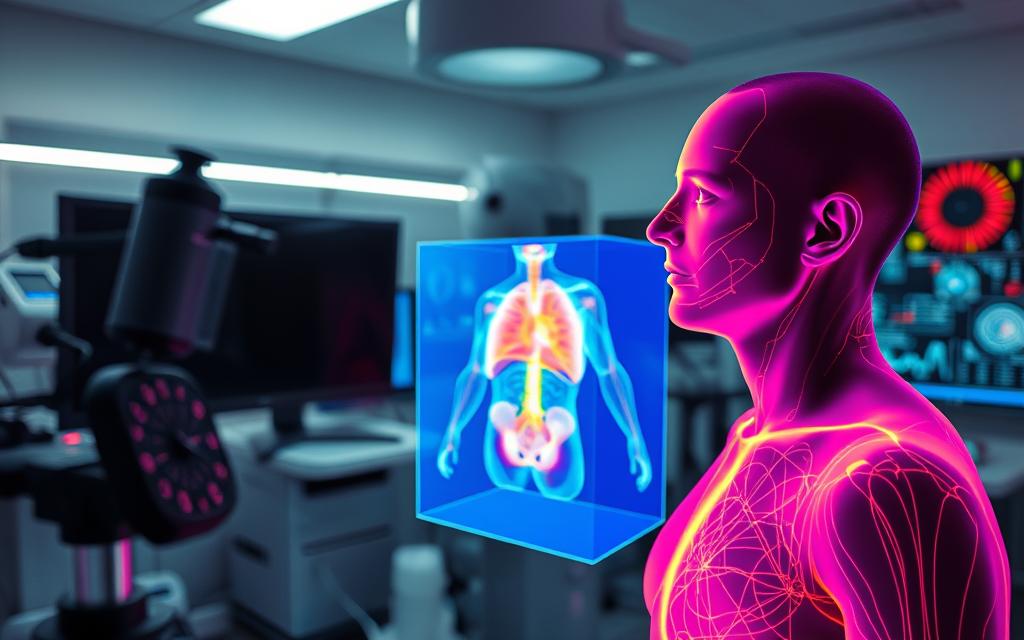
Medical thermal imaging cameras make detailed heat maps of the body. They show inflammation and blood flow problems. This helps doctors find and fix issues fast.
Doctors use thermal imaging to check injuries, see how healing is going, and find infections. It’s especially useful for managing pain by showing where inflammation and nerve issues are.
Infrared thermometers are common in hospitals. They give temperature readings quickly without touching the skin. This makes patients safer and more comfortable during checks.
Pulse oximeters are also key. They use infrared light to check blood oxygen levels through the skin. This lets doctors keep an eye on things without needles or invasive tests.
Research and Laboratory Applications
Science labs use infrared for detailed material analysis and research. Its precision is crucial in many scientific fields.
Infrared spectroscopy is a key method in chemistry labs. It identifies chemicals by seeing how they absorb infrared light at certain wavelengths.
Researchers use it to figure out molecular structures and find unknown substances. It shows how molecules are connected and what groups they have.
Astronomers use infrared telescopes to study objects that don’t give off much visible light. These tools find heat from distant stars, planets, and galaxies. This helps us learn more about space.
| Application Area | Technology Used | Primary Benefit |
|---|---|---|
| Medical Diagnostics | Thermal Imaging Cameras | Non-invasive condition detection |
| Patient Monitoring | IR Thermometers & Oximeters | Contactless vital sign measurement |
| Chemical Analysis | IR Spectroscopy | Molecular structure identification |
| Astronomical Research | Infrared Telescopes | Detection of cold celestial objects |
Infrared technology is getting more important in medicine and science. It shows how it can give insights without touching anything.
Advantages and Limitations of IR Technology
Infrared technology has both great benefits and some practical limits. It’s important to know these to decide how to use it in different fields.
Key Benefits and Strengths
IR systems have many advantages that make them popular. They are used in many areas, from homes to industries.
Wireless Convenience and Security
IR technology doesn’t need cables, making it very convenient. It’s perfect for remote controls and quick data transfers.
IR signals are also more secure than radio waves. They need a direct line of sight, which helps protect against unwanted access.
IR parts are cheap to make and easy to find. This makes infrared solutions affordable for many uses.
IR systems are also reliable and need little upkeep. They work well in many places, even where there’s a lot of interference.
| Aspect | Advantages | Limitations |
|---|---|---|
| Operation | Non-contact measurement | Line-of-sight requirement |
| Security | Directional signal protection | Limited range for security |
| Cost | Inexpensive components | Additional filtering needed |
| Environment | EMI immunity | Sunlight interference |
| Performance | High accuracy sensing | Environmental sensitivity |
Technical Constraints and Challenges
IR technology has many benefits but also some technical issues. These need to be thought about when designing and using IR systems.
Range and Interference Limitations
IR signals can only travel a short distance, usually under 10 meters. This means devices need to be placed carefully.
Other IR signals can also cause problems. Sunlight and artificial light can mess with sensors. To fix this, some systems use filters or special techniques.
Environmental Factors Affecting Performance
Weather and other things can affect how well IR systems work. Things like humidity, extreme temperatures, and fog can weaken signals.
Anything in the way can stop IR signals from getting through. This makes it hard to install IR systems in some places.
Even with these problems, new tech is helping to solve them. This means IR technology can be used in more areas.
Future Developments and Emerging Trends
Infrared technology is changing fast, thanks to hard work by researchers and engineers. They are finding new ways to use infrared in many areas. This is making a big difference in how we use infrared today.
Advanced IR Sensing Capabilities
New infrared sensing systems are getting better and better. They can now detect tiny temperature changes. This opens up new ways to detect and measure things.
Enhanced Resolution and Accuracy
Next-generation infrared sensors can spot temperature changes as small as 0.01°C. This is a big jump from before. It lets us see thermal patterns more clearly and measure things more accurately.
Companies are using new ways to make sure measurements are right. They use special algorithms to clean up the data. This makes the readings even more accurate.
Putting infrared technology with artificial intelligence is very exciting. Machine learning can now understand thermal patterns. It can tell what objects are and even guess their actions.
This AI integration in IR means sensors can make decisions on their own. They can tell the difference between people, animals, and objects. They also adjust to changes in their surroundings.
Next-Generation Communication Systems
Infrared communication is getting better to solve old problems. It can now reach farther and deal with interference better. This makes infrared a strong choice for modern communication.
5G and IoT Integration
Infrared tech works well with 5G networks. It helps when radio waves get in the way. This makes communication systems stronger and more flexible.
In IoT, infrared sensors are great for saving energy. They help detect things nearby and send data over short distances. They are key in smart spaces where clear communication is needed.
Quantum Infrared Technologies
Quantum infrared technology is a new and exciting field. It uses quantum effects to sense things in ways we thought were impossible. This could change how we do medical imaging, security checks, and scientific studies.
Scientists are working on quantum infrared detectors. These could make a huge difference in many fields. They use quantum effects to go beyond what’s possible with regular infrared systems.
The future of future IR technology looks bright. It will bring new uses in many areas. From healthcare to making things, these new technologies will change how we use infrared.
Conclusion
Infrared radiation has changed science and technology a lot. This IR technology summary highlights its broad impact. It’s used in everything from simple remote controls to advanced medical imaging.
Infrared applications are vast, including communication and sensing. TV remotes use IR for data transmission. Medical tools like thermography help find illnesses early, saving lives worldwide.
IR systems bring wireless convenience and security. They are also cost-effective for many uses. However, they have limits like range and interference from surroundings.
The future of IR systems looks promising. New advancements might improve resolution. AI and quantum tech could solve current issues. IR will continue to evolve in electronics, healthcare, and industry.
This technology is crucial in many areas. Its ongoing growth ensures it will remain vital for years to come.