

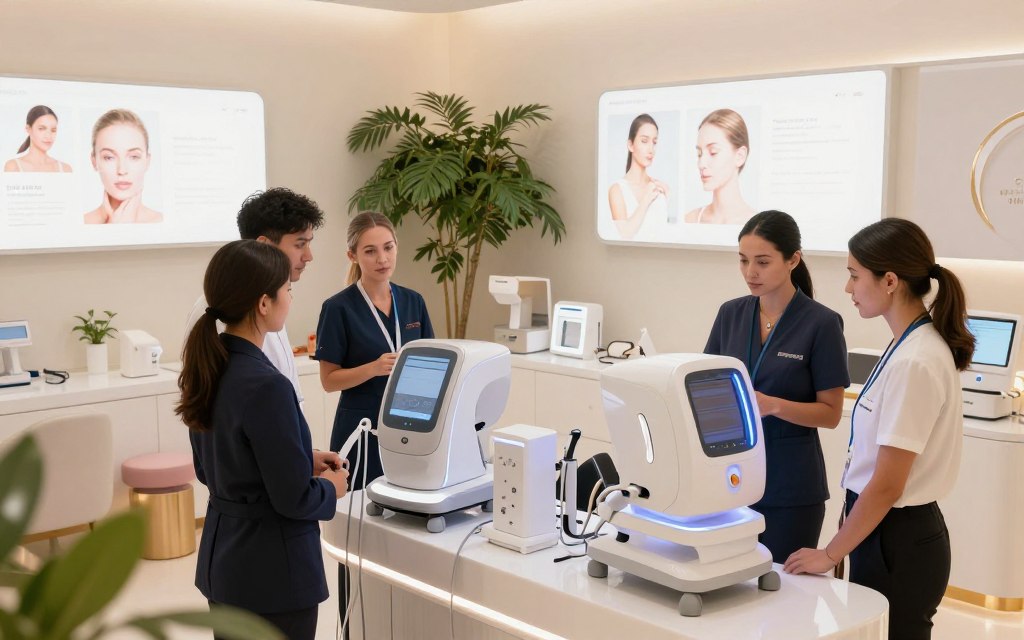
Today’s fast-paced beauty industry uses advanced devices and science to transform professional skincare. This field, called beauty technology, includes tools that improve treatment results and client satisfaction.
Diagnostic imaging systems and energy-based platforms help professionals provide precise, personalized services. LED therapy, microcurrent devices, and HydraFacial systems show how esthetics technology is reshaping beauty treatments.
This article explores beauty technology, including its definitions, evolution, categories, popular tools, benefits, and selection considerations. Understanding these areas helps beauty professionals navigate the changing world of skincare and treatments.
Key Takeaways
- Beauty technology integrates advanced tools into skincare practices.
- Modern devices enhance treatment precision and personalization.
- Examples include LED therapy and microcurrent devices.
- The article covers definitions, evolution, and popular tools.
- Understanding these technologies is crucial for beauty professionals.
What Is Esthetics Technology?
Esthetics technology blends science with traditional beauty practices. It improves skincare treatments and provides results that professionals can measure and repeat. In today’s fast-paced world, skincare technology matters to practitioners and clients.
Defining Esthetics Technology in the Modern Beauty Industry
Esthetics technology includes tools and methods that improve skincare and beauty treatments. It uses lasers, ultrasound machines, and LED panels, plus software for skin analysis and client management. Together, these parts create a complete approach to skincare.
Key Components of Esthetics Technology
| Component | Description | Examples |
|---|---|---|
| Hardware Devices | Machines that deliver treatments using energy | Lasers, LED panels, ultrasound machines |
| Software Platforms | Tools for analyzing skin and managing client data | Skin analysis software, appointment scheduling |
| Treatment Protocols | Guidelines combining technology and techniques | Microdermabrasion, chemical peels |
How It Differs from Traditional Beauty Practices
Unlike traditional beauty practices, modern beauty tools use devices that deliver precise energy levels for consistent results. This approach allows more customized treatments and better tracking of results.
The Relationship Between Esthetics and Technology
Technology works with estheticians instead of replacing them in today’s beauty industry. This partnership strengthens professional skills, supports accurate assessments, and helps tailor treatments to each client’s needs.
Technology as a Partner, Not a Replacement
“Technology in esthetics allows for a deeper understanding of skin health, ultimately leading to better client satisfaction.”
Why Esthetics Technology Matters Today
Esthetics technology matters as clients seek non-invasive treatments with visible results. With rising expectations and a competitive market, advanced technology helps professionals meet client demands. Evidence-based results build client trust and loyalty.
Related Posts:
- What Is IR Technology Infrared Communication and Sensing
- What Is Cloud Network Technology Samoa Limited A…

- The Top Technology Trends to Watch in 2024
- What Is Clicker Technology Classroom Response Systems

- What Is the National Institute of Standards and…
- How to Market Technology Reaching the Right Audience
For more information about integrating modern beauty tools into your practice, explore courses at AE Institute.
The Evolution of Beauty Technology
Beauty technology has moved from traditional methods to advanced solutions. Over time, the industry adopted tools that improve treatments and client satisfaction. This progress shows how esthetician technology became more effective and accessible.
From Traditional Treatments to High-Tech Solutions
In the past, beauty treatments depended on natural remedies and manual techniques. Herbal concoctions and basic massage were common.
As technology advanced, estheticians gained better tools. Microdermabrasion arrived in the 1980s, allowing deeper skin exfoliation and rejuvenation.
Milestones in Skincare Technology Development
Several key milestones shaped skincare technology:
- 1990s: The FDA cleared intense pulsed light (IPL) technology for hair removal, revolutionizing hair removal methods.
- Early 2000s: Fractional laser resurfacing emerged, offering non-invasive options for skin rejuvenation.
- Present Day: Multi-functional platforms combine various technologies, including radiofrequency and ultrasound, enhancing treatment efficacy.
The Rise of Non-Invasive Procedures
Today, many clients want non-invasive procedures that provide results without surgery. They seek treatments with little downtime and quick recovery. This demand has pushed esthetician technology toward safer, more effective care.
Brands like Cynosure, Lumenis, and Dermalogica lead this technology revolution. They provide tools that empower estheticians to offer personalized care. Historical innovations in beauty technology support today’s customizable treatments and help clients receive the best possible care.
Core Categories of Esthetics Technology Tools
Esthetics technology tools help beauty professionals assess skin and choose effective treatments. These tools support tailored care through diagnostic and skin analysis devices, treatment-based technologies, and product infusion and delivery systems.
Diagnostic and Skin Analysis Devices
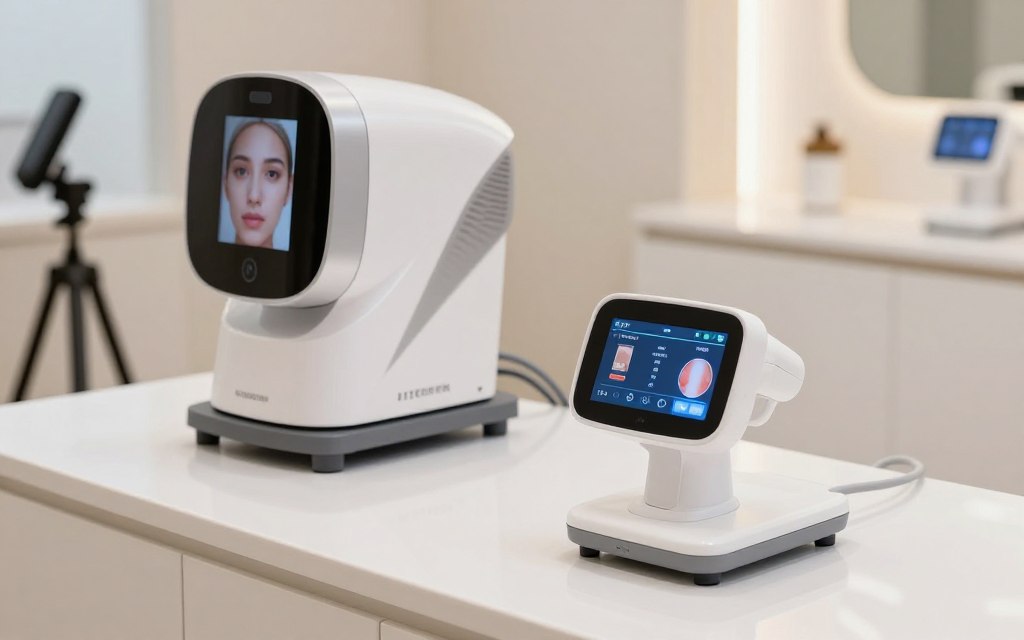
Diagnostic tools help estheticians assess skin conditions and choose suitable treatments. Among these, Wood’s lamps reveal pigmentation and bacterial issues. They use ultraviolet light to show conditions hidden from the naked eye.
Another key tool is the digital imaging system. Systems like Visia or Observ assess wrinkles, pores, UV damage, and redness. They help estheticians build treatment plans from accurate data.
Wood’s Lamps and Digital Imaging Systems
Using Wood’s lamps with digital imaging systems gives estheticians a fuller view of skin health. This combined approach can support more effective treatments.
Treatment-Based Technologies
Treatment-based technologies deliver results through several methods. One major group is energy-based devices, including lasers, intense pulsed light (IPL), radiofrequency, and high-intensity focused ultrasound. These devices use controlled thermal or mechanical energy to target wrinkles, sagging skin, and pigmentation.
Energy-Based Devices
Energy-based devices have changed esthetic treatments. They offer precise options for many skin concerns and remain useful in modern beauty practices.
Product Infusion and Delivery Systems
Effective product application supports strong skincare results. Product infusion and delivery systems help serums and active ingredients reach deeper into the skin. Ultrasonic spatulas and oxygen infusion machines improve product penetration, helping clients gain full benefits from treatment products.
Ultrasonic and Oxygen Infusion Tools
Ultrasonic and oxygen infusion tools help skincare products work more effectively. By supporting deeper absorption, these devices can create more visible and lasting results.
Each category of esthetics technology tools serves a distinct role in a complete treatment plan. Modern practices often combine tools from several categories to create stronger results. For example, the HydraFacial system combines exfoliation, extraction, and infusion, showing how technologies can work together.
Popular Modern Tools Used in Esthetics Practices
Modern tools are changing esthetics practices. These technologies improve treatments and can provide quick results. Here are popular tools used today.
LED Light Therapy Devices
LED light therapy devices help address several skin concerns. Different light wavelengths provide unique benefits:
| Light Color | Benefits |
|---|---|
| Red | Stimulates collagen production and reduces signs of aging. |
| Blue | Targets acne-causing bacteria, helping to clear breakouts. |
| Near-Infrared | Promotes healing in deeper tissues and reduces inflammation. |
Benefits of Red, Blue, and Near-Infrared Light
Each LED light therapy color has a clear purpose. Together, these devices can address many skin concerns.
Dr. Jane Smith, a leading esthetician, states, “LED therapy is a game-changer for clients seeking non-invasive skin rejuvenation.”
Microcurrent and Radiofrequency Machines
Microcurrent and radiofrequency machines are key tools in modern esthetics. Microcurrent devices send low-level electrical currents that mimic the body’s natural bioelectricity. This process tones facial muscles and improves skin elasticity.
Radiofrequency machines use thermal energy to heat the dermis. This heat stimulates fibroblast activity and creates new collagen and elastin. The result is firmer skin.
How These Tools Stimulate Collagen Production
Microcurrent and radiofrequency technologies help tighten and rejuvenate skin. Estheticians use them to provide effective treatments.
HydraFacial and Hydrodermabrasion Systems
HydraFacial systems combine gentle exfoliation, vacuum extraction, and serum infusion. This multi-step treatment provides visible results without downtime. It remains a favorite among clients.
Laser and IPL Equipment
Laser and Intense Pulsed Light (IPL) equipment support several esthetics treatments, including:
- Hair removal
- Pigmentation correction
- Treatment of vascular lesions
- Skin resurfacing
Common Applications in Esthetics Practices
These technologies treat many skin conditions. They also improve the overall client experience in esthetics practices.
How Esthetics Technology Enhances Skincare Treatments
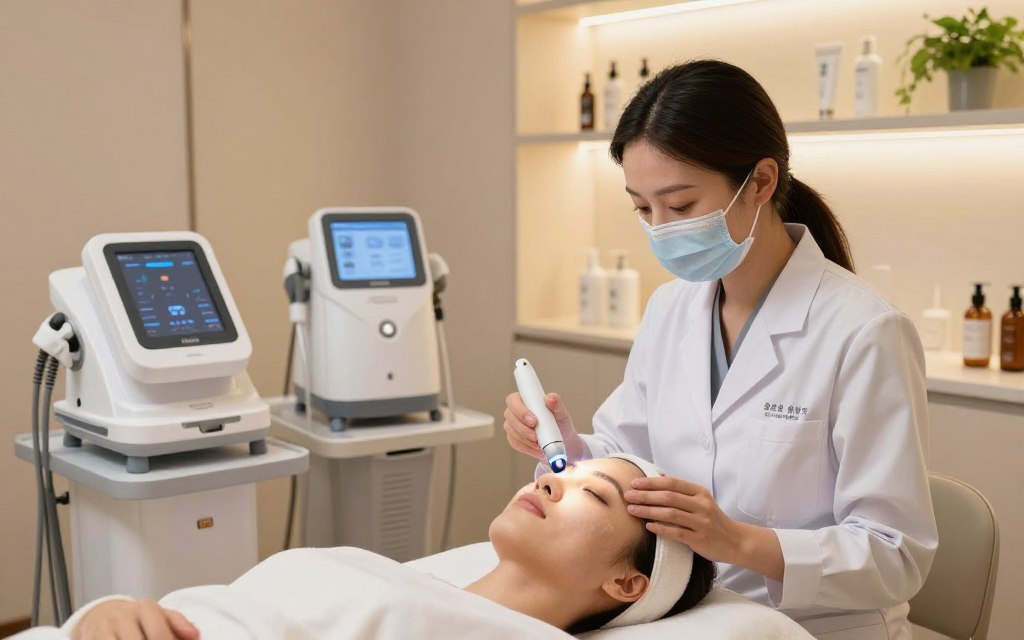
Esthetics technology transforms skincare by helping practitioners deliver precise, personalized treatments. Tools such as HydraFacial systems, laser equipment, and IPL systems can improve results and client satisfaction.
Precision and Customization in Modern Treatments
Modern esthetics technology supports precise skincare treatments. For instance, HydraFacial systems adjust suction and serum choices for each skin type. This customization helps match every treatment to the client’s needs.
Devices like laser equipment and Intense Pulsed Light (IPL) systems offer adjustable wavelengths and pulse durations. These settings target specific concerns while protecting nearby tissue. They support safer, more effective treatments.
Improved Client Comfort and Reduced Downtime
Esthetics technology can also improve comfort during skincare treatments. For example, non-ablative fractional lasers reduce pain and recovery time compared with older ablative methods. Many devices use cooling systems to soothe skin and create a more pleasant experience.
Clients may feel less anxious during treatment and spend less time recovering. They can return to daily activities more quickly.
Long-Term Results and Treatment Effectiveness
Esthetics technology can provide immediate results and improve skin health over time. Radiofrequency and laser sessions promote collagen remodeling, which can continue for months after treatment. This lasting effect can gradually improve skin quality.
Regular use of these technologies can significantly improve treatment effectiveness. They offer a valuable investment for practitioners and clients.
Data-Driven Treatment Planning
Data-driven planning is another key way esthetics technology improves skincare. Digital skin analysis tools measure wrinkle depth, pore size, and melanin distribution. These measurements help practitioners choose suitable treatments for each client.
These tools also make it easier to track progress over time. Practitioners can adjust treatments as the client’s skin condition changes.
| Technology | Benefits | Key Features |
|---|---|---|
| HydraFacial | Customizable serums and suction | Adjustable settings for different skin types |
| Laser Equipment | Targeted treatments with minimal damage | Customizable wavelengths and pulse durations |
| IPL | Effective for pigmentation and vascular issues | Broad spectrum light for various skin concerns |
Benefits of Integrating Technology into Esthetics Services
Technology gives esthetics businesses and clients many benefits. Modern tools improve client experiences and support business growth.
Business Growth and Client Retention
Technology can support business growth and improve client retention. Advanced treatments create personalized results, so clients may return. LED therapy and microcurrent facials show results and encourage package purchases, supporting client retention.
Competitive Advantage in the Beauty Market
Cutting-edge technology gives esthetic practices a competitive edge. Modern devices help businesses stand out from practices that rely only on traditional methods. Clients may pay premium prices for advanced care, so spa owners must stand out in a crowded market.
Expanded Service Offerings
The right technology can greatly expand an esthetic practice’s services. One multi-platform device can support skin tightening, acne management, and pigmentation correction. This flexibility supports treatment customization for diverse clients without hiring more specialized staff.
Meeting Modern Client Expectations
Today’s consumers are informed and expect a lot from their treatments. They research treatments online and prefer visible results with little downtime. Technology helps esthetic practices meet these needs and stay relevant in a changing beauty market.
For more esthetics technology insights, explore our comprehensive resources.
Key Considerations When Choosing Esthetics Technology
Choosing the right esthetics technology is crucial for any beauty practice. First, assess your client demographics and the treatments they seek.
This helps ensure your devices match your target market’s needs.
Budget is another important factor. Look beyond the equipment’s initial purchase price to consider ongoing costs.
These costs include consumables, maintenance, and staff training. A careful financial analysis can help determine your return on investment.
Do not overlook safety or regulatory compliance. Verify that energy-based devices have FDA clearance or CE marking.
Set clear protocols to protect client safety and satisfaction.
Manufacturer training and support can strongly affect your technology’s success. HydraFacial offers comprehensive training programs, while Cynosure provides valuable clinical education resources.
These resources can build your team’s confidence and improve its effectiveness.
Product infusion systems offer a versatile option. They improve serum penetration and can produce visible results that boost retail product sales.
Data-driven skincare is also growing more popular, using skin analysis data to guide treatments and homecare recommendations.
Begin with one or two high-impact technologies that address your clients’ most common concerns. This approach supports a smoother transition and maximizes modern esthetics technology’s benefits.