


Technology is changing fast today. Companies need to keep up with the latest trends.
Some new tech is just an update, while others are completely new. Both are important for business leaders to watch.
Knowing about future tech trends helps businesses stay ahead. They must keep up with digital changes quickly.
2024 will see big changes in many areas. From AI to quantum computing, these changes will change how businesses work and add value.
It’s crucial to stay updated on technology trends 2024. This is key for businesses to grow and survive in a tech world.
Understanding the Technology Landscape for 2024
Digital transformation in 2024 is now a key part of how companies work. They need to blend new technologies into their core operations, not just as extra projects.
Artificial intelligence is a big change in 2024’s tech landscape analysis. After lots of work, AI is ready to be a key part of companies’ plans. This change makes companies think differently about how to innovate.
Business leaders must make room for the latest tech trends in their plans. They also need to stay ready for surprises. Technology changes fast, so being flexible is key.
Related Posts:
- What Is Cloud Network Technology Samoa Limited A…

- How to Market Technology Reaching the Right Audience

- How Technology Is Good for Students Enhancing Learning

- What Is the National Institute of Standards and…

- What Is Clicker Technology Classroom Response Systems

- What Is IR Technology Infrared Communication and Sensing

“The companies that succeed in 2024 will be those that treat technology not as a department but as a fundamental business capability integrated across all operations.”
More companies can now use technology that was once only for big businesses. This change brings both chances and challenges in the technology ecosystem.
Getting business technology integration right needs careful planning. Companies must think about how new tech fits with what they already have. They also need to plan for future growth. Here’s a table showing how ready different technologies are for 2024:
| Technology Area | Implementation Readiness | Business Impact Level | Integration Complexity |
|---|---|---|---|
| Artificial Intelligence | High | Transformational | Medium-High |
| Cloud Infrastructure | Very High | Fundamental | Low-Medium |
| IoT Systems | Medium | Significant | High |
| Blockchain Solutions | Medium-Low | Moderate | Very High |
The technology ecosystem is changing fast. Companies need strong digital transformation plans. These plans should cover both what’s needed now and what might come later.
For digital transformation 2024, companies should aim for flexible systems. This way, they can use new tech without upsetting their current work.
Many technologies coming together offer chances for new ideas. Companies that handle this well will get ahead in their markets.
Good business technology integration needs teamwork between tech experts and leaders. This team makes sure tech solves real problems and fits with the company’s goals.
As we move into 2024, tech changes won’t slow down. Companies need to be ready to learn and adapt. This way, they can get the most from their tech investments.
Companies that do well with digital transformation 2024 will lead the way. They’ll grow and stay innovative in a world driven by technology.
Artificial Intelligence and Machine Learning Evolution
The world of artificial intelligence is changing fast, especially in 2024. This year is key for new tech and making sure AI is used right. Companies everywhere are trying to balance new ideas with doing the right thing in AI.
Generative AI’s Next Phase
Generative AI has grown from just testing to being ready for big businesses. By 2026, it will be fully used in companies. This is a big step forward in AI.
AI can now handle text, images, audio, and video easily. This makes businesses work better and customers happier.

More people can use powerful AI tools now. This is because of better technology. It makes things fairer for all kinds of businesses.
AI Ethics and Governance Frameworks
AI is being used more in important business areas. So, we need strong rules for AI. Governments are making laws to help.
These rules focus on fairness, being open, and being accountable. Companies are setting up rules to keep things right while still being creative.
There are many rules to help with AI:
| Framework | Key Focus Areas | Adoption Level | Primary Benefits |
|---|---|---|---|
| EU AI Act | Risk classification, transparency | High in Europe | Legal compliance, consumer trust |
| NIST AI RMF | Measurement standards, testing | Growing globally | Standardised evaluation, interoperability |
| IEEE Ethically Aligned Design | Human wellbeing, accountability | Industry-specific | Ethical alignment, social responsibility |
| OECD AI Principles | International standards, inclusivity | Government level | Global coordination, policy development |
These rules help solve big AI problems. They make sure AI helps everyone, not just a few. It’s all about making AI good for society.
Using these rules well needs teamwork. People from tech, law, and ethics must work together. The best companies think about ethics all the time, not just after.
Quantum Computing Breakthroughs
The world of quantum computing is moving fast in 2024. It’s moving from just ideas to real, working technology. This big change means computers can now solve problems that were too hard before.
Practical Quantum Applications Emerging
Quantum computing is now used in real life, not just in labs. Companies all over the world are testing new uses for quantum tech. These new uses are some of the most exciting things happening in tech today.
Pharmas use quantum to find new medicines faster. Banks use it to understand risks better. And logistics companies use it to plan routes more efficiently.
IBM thinks we’ll see quantum computers being really useful by 2026. This would be a huge step forward in computing history. It means quantum tech will start to change many industries in big ways.
Hybrid systems are also becoming more common. They mix old computers with new quantum parts. This helps solve problems now, while we wait for full quantum computers.
Major Players in Quantum Development
The quantum world has big names and new startups working together. These groups are leading the way in quantum tech.
IBM is at the front with its quantum processors and cloud services. Google is pushing for quantum supremacy with its processors. Microsoft is working on special qubits and tools for businesses.
New quantum startups like Rigetti Computing and IonQ are also making a big impact. They focus on specific areas of quantum tech.
| Company | Focus Area | Notable Achievement | Commercial Applications |
|---|---|---|---|
| IBM | Quantum Processor Development | 127-qubit Eagle Processor | Cloud quantum computing services |
| Quantum Supremacy | Sycamore Processor | Quantum AI research | |
| Microsoft | Topological Qubits | Quantum Development Kit | Enterprise quantum solutions |
| Rigetti Computing | Hybrid Systems | 80-qubit Aspen-M Processor | Quantum computing as a service |
| IonQ | Trapped Ion Technology | 32-qubit Systems | Specialised quantum applications |
The race to improve quantum tech is driving fast progress. Each company brings its own special skills to the table. This mix of ideas is speeding up the development of quantum tech.
Working together, companies and research groups are pushing quantum innovation. They mix theory with practical work. This helps turn lab ideas into real products.
More money is being put into quantum computing. This support comes from both private investors and governments. It helps keep the work going and moving forward.
As quantum tech starts to be used in real life, a new era of computing begins. Companies should keep an eye on these changes. Understanding quantum tech early can give a big advantage in the future.
Extended Reality (XR) Maturation
The world of extended reality is changing fast in 2024. It’s moving from being just an idea to being a real business tool. XR technology is becoming more common in companies, thanks to better hardware and software.
Experts say augmented reality will soon be part of our daily lives by 2026. As AR tech gets better, digital stuff will mix well with our world. This will make our experiences more real and fun.
Apple Vision Pro and Spatial Computing
Apple’s Vision Pro has changed how we see mixed reality. It’s a top-notch headset that shows how digital and real worlds can meet. It has amazing displays and sensors for a deep, immersive experience.
The Vision Pro uses eye-tracking and hand gestures for control. This makes using it feel natural and easy. It shows how we can work with digital stuff in our space, not just look at it.
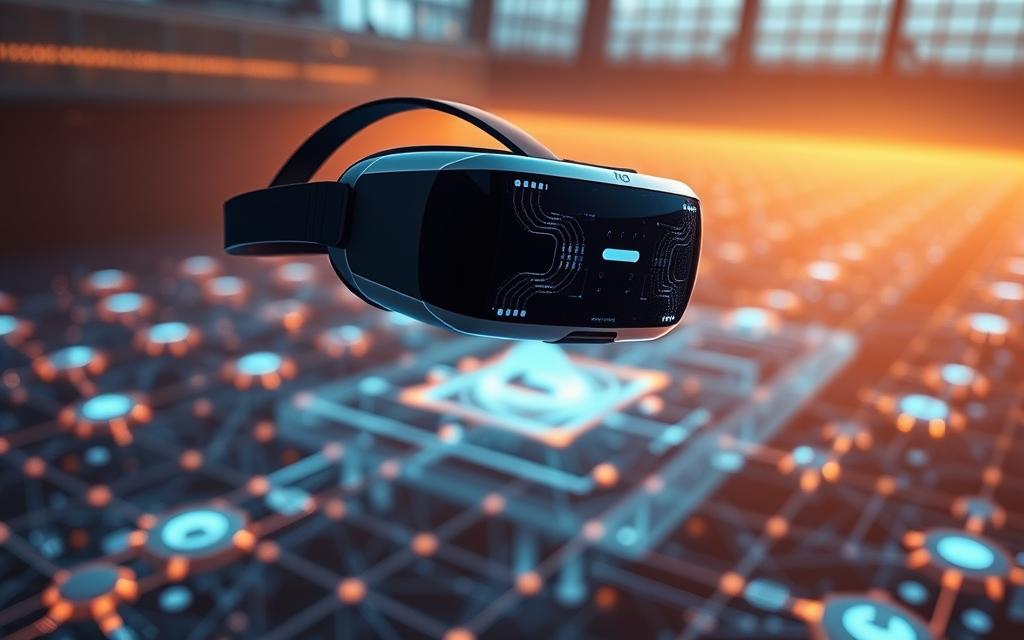
Developers are making special apps for Vision Pro. These apps help professionals in fields like architecture and medicine. They use gestures to work with 3D models and data, changing how we do things digitally.
Enterprise VR/AR Implementation
Companies are using XR for real tasks that help them save money and work better. VR and AR are now key parts of how businesses work, especially in training and teamwork.
Big companies are making their own XR solutions for specific problems. They use it to cut costs, make things safer, and work more efficiently than before.
The table below shows how different industries use VR and AR:
| Industry Sector | Primary Application | Key Benefits | Adoption Level |
|---|---|---|---|
| Manufacturing | Assembly training & maintenance guidance | 30% reduction in training time | Widespread |
| Healthcare | Surgical planning & medical training | Improved procedure accuracy | Growing |
| Retail | Virtual product demonstrations | Enhanced customer engagement | Moderate |
| Education | Immersive learning experiences | Higher knowledge retention | Emerging |
AR is great for working together from different places. Teams can use virtual spaces to work together on 3D models and data. This makes teamwork better than ever.
Improvements in hardware have made XR useful for work all day. New headsets are comfy, have clear displays, and track movements well. This makes XR good for real work, not just demos.
The software for XR has also grown up. Now, there are tools for making apps for businesses. These tools work with other systems, are safe, and help see how XR saves money.
Sustainable Technology Solutions
More companies are focusing on green tech as they become more eco-conscious. This shift has made sustainability a key factor in the tech world. Now, aiming for net-zero is seen as a competitive edge.
Big cloud providers are making big strides in sustainability. For example, Amazon Web Services has made its infrastructure 4.1 times more energy-efficient. It has also cut carbon emissions by up to 99% compared to old methods.
“Sustainable technology will once again take centre stage in 2024 as organisations look for green alternatives to meet their net-zero targets regardless of sector.”
Green Computing Initiatives
The tech world has adopted wide-ranging green computing plans. These plans aim to lessen environmental impact at every stage. They focus on cutting down energy use throughout the tech life cycle.
Companies have made big leaps in making tech more energy-efficient. New processors and parts work better while using less power. They also use less waste and recycled materials in making these parts.
Software development has also turned green. New tools manage energy use based on demand. Developers now focus on making code more efficient and using fewer resources.
The tech world has set clear goals for being more sustainable:
| Initiative | Key Benefits | Industry Adoption |
|---|---|---|
| Energy-Star Compliant Hardware | 30-50% power reduction | Widespread among manufacturers |
| Virtualisation Technologies | Server consolidation up to 10:1 | Standard in enterprise environments |
| Algorithm Optimisation | Reduced computational requirements | Growing focus among developers |
| Circular Economy Practices | Extended product lifecycles | Increasing manufacturer commitment |
Carbon-Neutral Data Centres
Data centres are key in the push for carbon-neutral tech. They have changed a lot in how they use energy and affect the environment.
Many data centres now run on renewable energy. Solar, wind, and hydroelectric power are used to cut down on fossil fuel use. Some centres are even energy-independent thanks to on-site power generation.
New cooling tech has made data centres more efficient. Liquid cooling, passive designs, and AI help reduce energy needed for cooling. This has cut cooling power use by up to 40% in newer centres.
Carbon offsetting is also used to help. Companies invest in projects like reforestation and renewable energy. These efforts help balance out emissions and support the environment.
These efforts have made sustainable tech a must for both the planet and business. Companies that focus on the environment often get better customer views and follow rules better.
Edge Computing Expansion
The digital world is changing fast, moving from cloud centres to edge computing. This big change is making processing faster and cutting down on delays for important tasks.

Grand View Research says the edge AI market hit USD 20.78 billion in 2024. This shows how big the shift is. Now, things like wearables and drones can handle data on their own. This cuts down on delays and saves money, while keeping data safe.
5G and IoT Integration
The arrival of 5G is key for advanced IoT systems. It offers the speed and quickness needed for IoT to work well.
This mix lets us do more complex tasks at the edge, not just in the cloud. 5G and IoT together open up new chances in many fields.
Factories use it for quick checks on their machines. Smart cities manage traffic and keep people safe with connected sensors. Hospitals can monitor patients remotely without delay.
Real-Time Processing Demands
Today’s apps need fast answers, something old clouds can’t always give. Cars that drive themselves, factory systems, and AR all need data fast.
They can’t wait for data to go to the cloud and back. So, we process data where it’s made – at the edge.
This change meets many needs:
- Less delay for urgent tasks
- Less bandwidth use by handling data locally
- More privacy with data kept close
- Staying reliable even when networks fail
This shift is more than just tech. It’s a new way of thinking about data and systems in our connected world.
As these techs get better, we’ll see even more advanced edge computing. This will help apps work in real-time, as they need to.
Cybersecurity Evolution
Digital protection strategies are changing fast as threats get smarter. Companies are moving away from old defence methods to new, better security plans. This change is a big step forward in how we protect our digital world.

AI-Powered Threat Detection
Machine learning is changing how we spot and tackle security threats. These systems look at huge amounts of data to find odd patterns that might mean an attack is coming. They get better at finding threats as they learn from new ones.
Artificial intelligence helps find weaknesses before they can be used by hackers. Security teams can spot and deal with threats quicker. This means hackers have less time to cause harm.
AI-driven security has many benefits:
- It can analyse threats in real-time and predict them
- It can automatically handle common security issues
- It cuts down on false alarms thanks to machine learning
- It keeps getting better at spotting new threats
Zero Trust Architecture Adoption
The zero trust model is becoming more popular as its value is seen. It’s based on the idea that no one or anything should be trusted automatically. Instead, everything needs to be checked all the time.
Zero trust security follows a few key rules:
- Users must always check their identity during sessions
- Access is only given for what’s needed for a task
- Systems assume breaches have already happened
This model goes beyond old ways of protecting data. It focuses on who is trying to get in, not just where they’re coming from. This makes it harder for threats to get in.
Companies using zero trust security get to see their digital world more clearly. They can control who gets to what data and how. This detailed approach is the future of keeping digital places safe.
Blockchain and Web3 Developments
The blockchain world in 2024 is changing fast. It’s moving from just being about cryptocurrency to being used in big business. This blockchain evolution is a big deal for how companies deal with digital trust and openness.

Enterprise Blockchain Applications
Companies from all kinds of industries are using blockchain for real benefits. It’s especially useful for managing supply chains. This lets them track goods in real time, from where they start to where they end up.
Another area seeing growth is digital identity management. Companies are working on systems that let people control their own data. This helps keep personal info safe while following privacy laws.
Smart contracts are also becoming more popular. They help make deals happen automatically and in a way that’s easy to check. This cuts down on paperwork and makes it easier to prove things are done right.
Asset tokenisation is a new and exciting use of enterprise blockchain. It turns real things and ideas into digital tokens. This opens up new markets and ways to make money that didn’t exist before.
Regulatory Framework Progress
The rules for blockchain and Web3 development are getting clearer in many places. Governments are moving from being unsure to setting clear rules. These rules help keep people safe while letting new ideas grow.
Cryptocurrency rules are getting more solid too. Countries are setting up rules for places where people buy and sell cryptocurrencies. These rules help stop bad things from happening and make it clear for businesses how to operate.
NFT markets are also getting more attention from regulators. They’re working on rules for things like who owns what and how to protect buyers. This helps make sure the market is fair and safe for everyone.
Decentralised apps face special challenges, but regulators are finding ways to help. They’re focusing on making it possible for new ideas to grow within the law. This helps everyone feel more secure and confident.
As cryptocurrency regulation gets better, more big companies will start using blockchain. With clearer rules, more money will go into building and using blockchain technology.
Biotechnology and Digital Health Integration
The mix of biological sciences and digital tech is changing healthcare a lot in 2024. It brings new ways to watch, diagnose, and treat health issues with digital health tech. This blend leads to more tailored, accurate, and effective healthcare than ever before.
Wearable Technology Advancements
Today’s health wearables do more than just track fitness. They have advanced sensors that check vital signs very accurately. These devices also last longer, connect better, and link up with health records easily.
They can spot heart rhythm problems, check blood oxygen, and track sleep well. New tech lets them track glucose and blood pressure without needles. This makes early care better by giving health updates in real-time.
Research shows “Neural interfaces, powered by brain-computer tech, let people control devices, talk, and even move again with just their thoughts.” This is the latest in wearable tech.
Personalised Medicine through AI
Artificial intelligence is changing personalised medicine by making treatments fit each person’s genes and health data. AI looks at lots of data like genes, lifestyle, and health trends to spot patterns and predict risks.
This way, doctors can give treatments that really fit each patient. AI helps figure out the best medicine doses, spots side effects, and suggests ways to prevent problems.
AI is also changing how drugs are made and tested. It helps find the right medicines for certain groups of people, making drugs better and faster.
For biotech integration to work, we need to think about a few things:
- Keeping health data safe and private
- Getting different health systems and devices to work together
- Following rules in many places
- Checking if AI and wearable data are right for treatment
The future of healthcare is bright because of biotech and digital tech coming together. As these areas keep growing, we’ll see more care that’s tailored, effective, and easy to get. This will change health outcomes a lot.
Autonomous Systems and Robotics
The world of self-operating machines is changing fast, especially in 2024. We see big steps forward in both home and work uses. These machines use artificial intelligence, smart sensors, and engineering to work almost on their own.
Advanced Driver Assistance Systems
Today’s cars are becoming like computers on wheels. They’re getting closer to driving by themselves thanks to ADAS technology. This makes driving safer and easier.
Some key updates include:
- Systems that use lidar, radar, and cameras together
- AI that makes quick decisions based on what it sees
- Better ways for cars to talk to other things around them
Laws are also changing to keep up with these new cars. Governments are setting rules for testing and using these cars. They want to make sure they’re safe as they get more advanced.
Industrial Automation Growth
The world of making things and moving goods is changing a lot because of robots. Companies are learning more about using robots to help them work better.
Here’s how it’s growing:
- Robots that work with people
- Machines that can work all the time with little rest
- Systems that check things carefully to make sure they’re right
This change isn’t just for making things. Other areas like healthcare and farming are also using robots. They help make things better, cheaper, and safer. Robots can learn and change as they go, making them very useful.
As these technologies get better, companies need to think about how to use them right. They also need to consider how to change their teams to get the most out of these new tools.
Neuromorphic Computing Progress
Neuromorphic systems are making big strides by combining neuroscience and computing. This new way of processing information is a big change from old computing methods.
Neuromorphic computing works like the brain, using neural networks. It’s great for tasks in artificial intelligence.
Brain-Inspired Processing Architectures
Computing systems now use brain-like processing elements. These help with pattern recognition and learning better than old processors.
Neural processing units are special chips for these brain-like models. They do parallel tasks well, unlike regular CPUs.
Companies and research groups are making better neuromorphic chips. These chips are good at handling complex data and learning tasks.
Energy-Efficient Computing Solutions
Neuromorphic computing is very energy-efficient. It uses much less power than old systems for the same tasks.
This makes neuromorphic systems great for places where power matters. Think mobile devices, IoT sensors, and edge computing.
Benefits of neuromorphic energy efficiency include:
- Lower costs for big computing setups
- Longer battery life for devices on the go
- Less need for cooling in data centres
- Less harm to the environment
As AI workloads grow, neuromorphic computing is key for sustainable AI. It keeps performance high without using too much energy.
Brain-inspired processing is useful in many areas, like:
- Real-time sensor data analysis in self-driving cars
- Advanced pattern recognition for health checks
- Adaptive control in factories
- Efficient natural language processing
In 2024, neuromorphic computing’s progress is clear. As it gets better, it will be a big part of future computing in many fields.
Conclusion
This article has given us a detailed look at the digital world’s future. We see how artificial intelligence, quantum computing, extended reality, and green tech are changing our world. They are setting the stage for a big shift in technology.
Nowadays, things are moving fast in tech. As we move into 2024, new things will pop up. Companies need to be ready to grab these new chances.
Investing wisely is key. Focus on AI, better security, and eco-friendly tech. Also, getting the right skills and teaming up with others is vital. This will help you use these new tech ideas well.
Looking ahead, these techs will keep getting better. They might even mix in new ways. This could change how we work, talk, and tackle big problems.
This summary shows we must be ready to change. Companies that adapt and stay true to values will do well. They’ll be ahead in the fast-changing tech world.
FAQ
What are the key technology trends shaping business strategies in 2024?
In 2024, we see big changes in tech trends. Artificial intelligence is getting better, and quantum computing is making progress. Extended reality, like VR and AR, is becoming more common. We also see a focus on sustainable tech and cybersecurity.
Blockchain, digital health, and autonomous systems are also on the rise. These changes bring new chances and challenges. Companies need to keep up and adjust their plans.
How is generative AI evolving in 2024?
Generative AI is growing up in 2024. It’s moving from fun tricks to real business uses. It can now handle more tasks, like making content and helping with customer service.
It’s also working better with other systems, making it more useful in many fields.
What role does ethics play in AI development this year?
Ethics is key in AI this year. Companies are focusing on making AI fair and transparent. They’re also following new rules to ensure AI is developed responsibly.
Are there practical applications for quantum computing emerging in 2024?
Yes, quantum computing is becoming useful in 2024. It’s helping in fields like medicine, finance, and logistics. It’s solving complex problems and making things more efficient.
Which companies are leading quantum computing development?
Big names like IBM, Google, and Microsoft are leading in quantum computing. They’re working on new systems and finding ways to use quantum tech in real life.
How is Apple influencing the extended reality market with Vision Pro?
Apple’s Vision Pro is changing the game in VR. It’s setting high standards and making people excited about VR. Its tech is making VR better for both fun and work.
How are businesses using VR and AR beyond entertainment?
Companies are using VR and AR for more than just fun. They’re using it for training, design, and even customer experiences. It’s making things more efficient and fun.
What sustainable technology initiatives are gaining traction in 2024?
Green tech is big in 2024. Companies are making tech that uses less energy and is better for the planet. Cloud providers are even building data centres that use clean energy.
How is edge computing evolving with 5G and IoT?
5G is making IoT better by making it faster and more reliable. This is helping with things like self-driving cars and smart factories. It’s making tech work better on the edge.
What advancements are being made in AI-powered cybersecurity?
AI is getting better at keeping tech safe. It can spot threats and respond quickly. This is helping companies stay safe from cyber attacks.
How is zero trust architecture being adopted in 2024?
Zero trust is becoming a big deal in 2024. It’s about checking who you are and what you can do all the time. It’s making tech safer by focusing on who’s using it.
What enterprise applications is blockchain technology being used for?
Blockchain is being used for many things in business. It’s making supply chains more open, helping with digital IDs, and making smart contracts. It’s making things more secure and efficient.
How is the regulatory landscape for blockchain and Web3 evolving?
Rules for blockchain and Web3 are getting clearer. Governments are making laws to help these new techs grow. This is making it safer and more stable for everyone.
What are the latest advancements in wearable health technology?
Wearable tech is getting better in 2024. It can track your health better and last longer. It’s working better with doctors too, making health care more personal.
How is AI enabling personalised medicine?
AI is making medicine more personal. It’s using your health data to create plans just for you. This is making health care more effective and tailored.
What progress is being made in autonomous vehicle technology?
Self-driving cars are getting closer to reality. They’re using better sensors and AI to make decisions. This is making roads safer and more efficient.
How is industrial automation growing in 2024?
Automation is changing how we make things in 2024. It’s making things faster and more precise. It’s also working 24/7, making things more efficient.
What is neuromorphic computing, and how is it advancing?
Neuromorphic computing is like the brain in tech. It’s getting better at learning and recognizing patterns. It’s being used in devices to make them more efficient and use less power.
Why is energy efficiency important in computing, and how is it being addressed?
Saving energy is key for the planet and for money. New tech like neuromorphic computing is helping. It’s making devices use less power, which is good for the environment and our wallets.
