


The National Institute of Standards and Technology was set up in 1901. It is a US standards agency in the Department of Commerce. This organisation is one of America’s oldest labs, key for modern innovation.
Many technologies rely on NIST’s accurate measurements. This includes smart power grids and electronic health records. Atomic clocks, advanced nanomaterials, and computer chips all use NIST’s standards.
The agency’s work is crucial for many industrial processes and daily technologies. Its efforts help keep the US competitive in many sectors.
What is national institute of standards and technology
The National Institute of Standards and Technology (NIST) is America’s National Metrology Institute. It makes sure measurements are accurate in many parts of the economy. This agency keeps the standards that make our lives reliable and modern.
NIST is the official metrology institute of the United States. It creates and shares measurement standards. These standards help with quality control and working together across different industries.
Think about how measurements affect your day. Your car’s engine needs precise parts. Mobile devices work because of accurate time and frequency standards. Healthcare relies on reliable measurements for patient safety.
The NIST mission is to improve measurement science. This helps the economy and improves our lives. It supports everything from everyday products to critical infrastructure.
Without NIST’s standards, making things would be hard. Technology would have problems working together. Scientific research would find it hard to be reliable. NIST’s work helps measurements be trusted worldwide.
Related Posts:
- The Top Technology Trends to Watch in 2024

- What Is IR Technology Infrared Communication and Sensing

- How Technology Is Good for Students Enhancing Learning

- What Is Cloud Network Technology Samoa Limited A…

- How to Market Technology Reaching the Right Audience

- What Is Moen Reflex Technology Smooth Water Flow Control

This shows how NIST’s work quietly powers our modern world. It makes sure measurements are accurate and match international standards.
NIST is key for innovation, trade, and safety. Its work is vital for the economy and technology to grow.
Historical Development and Establishment
The National Institute of Standards and Technology has a long history of over a century. It shows America’s dedication to standardisation and technology growth in the 20th century.

Origins as the National Bureau of Standards
Congressman James H. Southard of Ohio saw the need for standardised measurements. His work led to the 1901 creation of the National Bureau of Standards.
The bureau’s main goal was to provide standard weights and measures. It also served as the top physical laboratory in the country. This helped with manufacturing, trade, and research during America’s growth.
Evolution into NIST in 1988
By the late 20th century, the agency’s role had grown. The 1988 change to the National Institute of Standards and Technology showed its wider mission. This included technology development and innovation support.
The name change reflected NIST’s new roles in fields like computer science and advanced materials. It also showed its commitment to America’s technological future and global competitiveness.
| Period | Institutional Name | Primary Focus Areas |
|---|---|---|
| 1901-1988 | National Bureau of Standards | Weights, measures, physical standards |
| 1988-Present | National Institute of Standards and Technology | Technology, innovation, comprehensive standards |
| Future Direction | NIST | Emerging technologies, cybersecurity, quantum science |
This timeline shows how NIST has kept up with America’s technological needs. It has always focused on measurement excellence.
Core Mission and Strategic Objectives
The National Institute of Standards and Technology has a clear purpose. It guides its many programmes and initiatives. This ensures the organisation stays focused on its main tasks and meets new technological challenges.
NIST’s main goal is stated in its mission: “To promote U.S. innovation and industrial competitiveness by advancing measurement science, standards, and technology in ways that enhance economic security and improve our quality of life.” This NIST mission statement is the basis for all its work.
Advancement of Measurement Science
Measurement science is at the heart of NIST’s work. The institute creates precise tools and methods. These are key for technological progress in many areas.
Key parts of this goal include:
- Developing cutting-edge measurement techniques
- Establishing reference standards for various industries
- Creating calibration services for precision instruments
- Pioneering new measurement technologies for emerging fields
This focus on measurement excellence leads to breakthroughs. It helps in fields like nanotechnology and climate science. It provides the technical basis for innovation in the American economy.
Promotion of Innovation and Competitiveness
NIST’s strategic goals aim to support the United States’ economic leadership. It does this through innovation promotion programmes. The institute works with industry partners to develop standards.
The organisation’s approach to fostering competitiveness includes:
- Developing voluntary consensus standards with industry input
- Providing technical assistance to small and medium-sized enterprises
- Creating testing infrastructure for new technologies
- Supporting workforce development through measurement training
These efforts help NIST’s vision of being a world leader in measurement solutions. It promotes fair standards. The institute’s work stimulates innovation and improves quality of life for Americans.
Through these areas, NIST is crucial to the United States’ technological infrastructure. It supports economic growth and ensures scientific accuracy in many industries.
Major Programmes and Laboratory Divisions
The National Institute of Standards and Technology has special research divisions. These labs are key to its scientific work. They show the institute’s dedication to research and standardisation in many areas.

Each lab focuses on different but related areas of science and technology. This way, they cover new technologies and keep basic measurements strong.
Physical Measurement Laboratory
The Physical Measurement Laboratory works on basic science that many technologies rely on. They create accurate ways to measure things like time, length, mass, and electrical units.
This lab’s work makes sure measurements are reliable in science and industry. Their work helps with making things precise and discovering new things.
Information Technology Laboratory
The Information Technology Laboratory works on computing and cybersecurity standards. They focus on digital infrastructure needs. They develop standards for software quality, cybersecurity, and information access.
They study cloud computing, biometrics, and cryptography to protect information. Their work helps companies keep their data safe.
Material Measurement Laboratory
This lab studies material properties and how they behave in different conditions. Scientists look at materials at a molecular level to understand them better.
Their work helps many industries, like healthcare and energy. They help create new materials with better properties.
Communications Technology Laboratory
This lab works on improving communication technologies. They focus on wireless systems and network infrastructure. They aim to make communication systems better and more efficient.
They help improve 5G networks and public safety communications. Their work makes sure communication systems are reliable and work well together.
| Laboratory Division | Primary Focus Areas | Key Contributions |
|---|---|---|
| Physical Measurement Laboratory | Fundamental constants, time standards, electrical measurements | Precision measurement standards, calibration services |
| Information Technology Laboratory | Cybersecurity, software standards, data privacy | Cybersecurity Framework, cryptographic standards |
| Material Measurement Laboratory | Material characterisation, chemical analysis, reference materials | Standard reference materials, analytical methods |
| Communications Technology Laboratory | Wireless communications, spectrum management, network standards | 5G standards, public safety communications |
These divisions show NIST’s wide approach to science and standardisation. They work together to make sure new technologies are based on solid, reliable measurements.
The lab structure allows for specialisation but keeps connections across disciplines. This helps tackle complex challenges in technology. It supports both basic research and practical uses in many fields.
Significant Contributions and Standards
The National Institute of Standards and Technology is a key player in technological progress. It has made big impacts in many fields. These NIST contributions have shaped industries, protected national interests, and driven innovation.
Cybersecurity Framework Development
In February 2014, NIST changed the game with its Cybersecurity Framework. This document offers voluntary guidance for managing and reducing cybersecurity risks.
The framework helps both private and public sectors. It provides:
- Standardised risk assessment methodologies
- Implementation tiers for organisational maturity
- Continuous improvement cycles for security programmes
- Interoperability with existing security standards
These cybersecurity standards are now the benchmark for protecting digital assets while keeping operations flexible.
Advanced Manufacturing Programmes
NIST is dedicated to industrial innovation through its advanced manufacturing initiatives. It offers practical guidance and tools for various stakeholders.
Key areas include:
- Smart manufacturing systems integration
- Additive manufacturing standardisation
- Robotics and automation frameworks
- Sustainable manufacturing practices
These manufacturing initiatives help American industries stay competitive. They also improve safety and efficiency in production environments.
Quantum Information Science Initiatives
NIST leads in quantum research, exploring new computing paradigms. Its quantum programmes are among its most forward-looking NIST contributions to science.
Research focuses on:
- Quantum computing architectures
- Cryptography resistant to quantum attacks
- Precision measurement using quantum phenomena
- Quantum networking protocols
NIST tackles modern challenges and looks ahead to future technological needs. Its work in cybersecurity standards and manufacturing initiatives shows its ability to link theory with practical applications.
Organisational Structure and Leadership
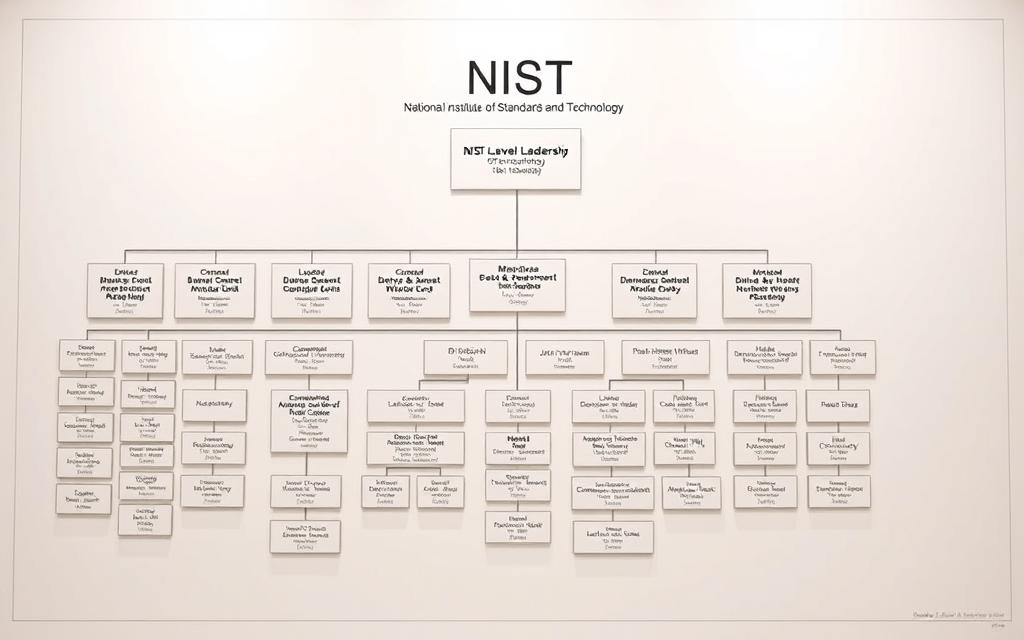
The National Institute of Standards and Technology has a detailed organisational structure. It helps its scientific mission succeed. This setup combines strong administration with top-notch technical skills.
Administrative Framework and Governance
NIST is a non-regulatory agency in the US Department of Commerce. It follows strict federal rules. The institute has a director chosen by the President and confirmed by the Senate. They are helped by deputy directors for different areas.
Its governance includes advisory committees with experts from various fields. These groups offer advice on:
- Research priorities and programme development
- Budget allocation and resource management
- Partnership opportunities with private and public sectors
- Long-term strategic planning initiatives
This setup ensures NIST stays independent in science but is also accountable to the public. The leadership helps make decisions quickly while keeping high scientific standards.
Technical Staff and Research Expertise
NIST has about 2,900 professionals, including scientists, engineers, and technicians. They work in various laboratory divisions. The team includes some of the world’s leading experts in measurement science and standards.
The institute also works with around 1,800 associates from companies and countries worldwide. This collaboration brings new ideas and skills to NIST’s projects.
NIST has more partnerships through 1,400 manufacturing specialists and staff at 350 centres across the US. This network helps tackle big challenges in many fields.
The technical staff is divided into special laboratory divisions. Each focuses on different measurement issues. This setup helps develop deep expertise and encourages teamwork on tough research questions.
NIST has high hiring standards and training programs. This keeps its research team at the cutting edge of technology. Their dedication to excellence makes NIST a leader in standards and measurement science.
Collaborative Efforts and Partnerships
NIST knows that big scientific breakthroughs don’t happen alone. It works with many groups across industries, countries, and schools. These partnerships help NIST’s work reach more people, making the economy and society better.
Industry Collaboration Programmes
NIST works closely with American businesses, especially small and medium ones. It does this through the Hollings Manufacturing Extension Partnership (MEP). NIST teams up with about 1,400 experts at nearly 350 centres all over the country.
This network helps businesses in many ways:
- Improves their processes
- Introduces new technologies and market info
- Supports training their workers
- Helps with supply chain issues
These NIST partnerships boost business success, create jobs, and grow the economy. It shows how science behind measurements helps the economy grow.
International Standards Organisations
In today’s world, standards must be global. NIST works with groups like:
- International Organization for Standardization (ISO)
- International Electrotechnical Commission (IEC)
- International Telecommunication Union (ITU)
This work makes sure American ideas and products are part of global international standards. It helps American businesses compete worldwide. NIST experts lead committees and groups, sharing knowledge and learning from others.
Academic Research Partnerships
NIST has strong ties with schools through research partnerships. These partnerships speed up scientific progress and create new measurement tools.
Some key ways they work together include:
- Joint research projects with university professors
- Programmes for academics to visit
- Grants for university research
- Access to special research facilities
These partnerships bring new ideas and talent to NIST. They also give students and researchers a chance to tackle real-world problems.
Current Priorities and Future Directions
NIST is always updating its focus to meet new challenges and chances. It works hard to keep America ahead in tech while solving global problems.

Artificial Intelligence Standards Development
The fast growth of AI makes AI standards a top priority for NIST. In 2023, the Biden administration said it would start a U.S. AI Safety Institute at NIST. This will help manage AI safety across the board.
This move is a big step in tackling AI’s complex issues. NIST aims to make AI reliable, open, and in line with human values.
The team works with tech leaders, schools, and other countries to make detailed rules. They want to keep the U.S. leading in safe AI use.
Climate and Environmental Measurement Programmes
NIST is serious about helping the planet through its environmental programmes. It creates precise tools and standards for fighting climate change and protecting nature.
These efforts include standards for carbon tracking, measuring renewable energy, and monitoring the environment. NIST’s work helps make policy decisions and reports on corporate sustainability.
Its research helps tackle climate issues and supports economic growth. NIST’s standards help measure environmental effects and track progress toward green goals.
Next-Generation Communications Technologies
NIST leads in setting security standards for new communication tech. In August 2024, it released encryption tools that can fight quantum computer attacks. This is a big win for cybersecurity.
This move tackles a major security risk for digital systems. It shows NIST is ready for future threats with the right solutions.
NIST also works on 6G, advanced networks, and secure IoT standards. These efforts help American businesses stay ahead in a connected world.
NIST’s future goals include making strong frameworks for security. It works with tech experts and global standards groups to create lasting communication standards.
Conclusion
The National Institute of Standards and Technology is key to American progress and staying competitive. It works on measurement science and standards, which are crucial for our society. Standards are vital in today’s world.
Your daily life depends on precise measurements. Cars run smoothly, phones connect well, and hospitals make accurate diagnoses thanks to NIST. This shows how standards keep us safe and things work together.
NIST is looking to the future, tackling new challenges and opportunities. It’s working on AI, quantum computing, and climate tech. NIST’s work will help us innovate safely and stay ahead in technology.
FAQ
What is the National Institute of Standards and Technology (NIST)?
The National Institute of Standards and Technology (NIST) is a key U.S. government agency. It was set up in 1901. NIST is the National Metrology Institute for the U.S., offering important measurement standards and technology.
These support industries like healthcare, telecommunications, and manufacturing.
How does NIST contribute to everyday technologies and industrial processes?
NIST’s work in measurement science makes sure everyday items and systems work well. This includes vehicles, mobile phones, and healthcare facilities. Its standards help drive innovation and keep the U.S. competitive.
This boosts economic security and quality of life in many sectors.
What was the original name of NIST and when was it established?
NIST was first called the National Bureau of Standards (NBS) in 1901. Congressman James H. Southard introduced the bill. It was renamed the National Institute of Standards and Technology in 1988.
This change reflected its broader mission, including technology and innovation.
What are NIST’s core mission and strategic objectives?
NIST’s main mission is to advance measurement science and promote innovation. It develops precise measurement tools and methods. It also supports U.S. industries through standards that drive growth and improve daily life.
What are some of NIST’s major laboratory divisions?
NIST has several key laboratory divisions. The Physical Measurement Laboratory focuses on fundamental measurements. The Information Technology Laboratory deals with IT standards and cybersecurity.
The Material Measurement Laboratory analyses materials properties. The Communications Technology Laboratory advances communication technologies.
What significant standards has NIST developed?
NIST has developed important standards like the Cybersecurity Framework. It guides managing cybersecurity risks. It also supports innovation in manufacturing and explores quantum computing and related technologies.
How is NIST structured and who leads it?
NIST is part of the Department of Commerce and is led by a director appointed by the U.S. government. It has a team of scientists, engineers, and technical staff. They work together on research and standards development.
They are supported by partnerships with industry and academia.
Does NIST collaborate with other organisations?
Yes, NIST works closely with other organisations. It has Industry Collaboration Programmes like the Manufacturing Extension Partnership (MEP). It also partners with International Standards Organisations to align global standards.
It works with universities to advance scientific knowledge.
What are NIST’s current priorities and future directions?
NIST’s current priorities include developing Artificial Intelligence Standards. It also focuses on Climate and Environmental Measurement Programmes. It works on Next-Generation Communications Technologies, like quantum-resistant encryption.
How does NIST support U.S. competitiveness and innovation?
NIST supports U.S. competitiveness and innovation by providing reliable measurement standards. It fosters research and development in key technological areas. It collaborates with industry and academia to keep American businesses and technologies leading globally.